



In contrast to 2024’s damp squib, this year’s summer seemed to stretch from April to October. A great one for reading as well as sun, too, beginning with three very different favourites in quick succession in July.

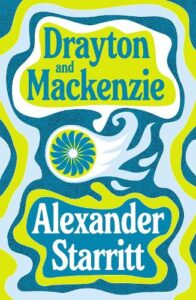
I wasn’t expecting much from Alexander Starritt’s Drayton and Mackenzie but I found it gripping. Opening in the early 2000s, it follows two very different men. Driven and intensely competitive, even with himself, James is the affable, indolent Roland’s antithesis. He’s a rising star with McKinsey’s consultancy, eyes set on becoming their youngest partner; Roland joins him, getting in by the skin of his teeth. When the 2008 crash hits, they’re sent off to Aberdeen to prepare employees for redundancy in the hard-hit oil and gas industry by the end of which they’ve formed a friendship that underpins the rest of their lives, and a business partnership in which one complements the other. Starritt’s novel is unusual in its theme of enduring male friendship and its setting in the business world. The latter might sound dull, but I found this story of ambition, determination and invention quite riveting.


Just one standout for August: Tasmanian author Robbie Arnott’s Dusk which follows Iris and Floyd, the children of notorious drunkards. With no work on the horizon, Iris suggests they head to the highlands after reports of a puma killing sheep and now humans. Travelling through a starkly beautiful landscape, they find a tavern, oddly enclosed with the bones of what might be a whale from when the plateau and mountains were submerged. Iris finds herself smitten with one of the hunters with whom she and Floyd reluctantly decide to combine forces. Their quest ends in a way neither could ever have imagined. I’ve been a fan of Arnott’s fiction since the publication of Flames which made it on to my 2018 books of the year list, despite my initial reservations, as did Limberlost in 2022.
 Two September favourites, beginning with Andrew Porter’s The Imagined Life which sees a middle-aged man, carrying the burden of his father’s disappearance since he was twelve, determined to get to the bottom of what happened to this vibrant, volatile man. Steven remembers his parents’ poolside parties in the early ’80s, usually culminating in films projected onto the cabana house wall. In the summer of 1983, one such party proved pivotal when a young visiting academic turns up, charming many including Steven’s father. The evening ends in his father’s disgrace although twelve-year-old Steven can’t fathom why. The promise of tenure recedes as his father moves into the cabana house, ostensibly to finish his book, visited by his lover, and increasingly manic. Steven is an engaging narrator who drew me into this absorbing, compassionate novel about love, loss and trauma.
My last choice for 2025’s third quarter is Patrick Ryan’s debut novel, Buckeye, which follows two
The year’s final quarter ranges from a difficult-to-categorise title from an author I’d never read before to a novel bordering on SF/Fantasy, a step or two outside my usual reading. More about that next week. Meanwhile, if you missed the first two parts and would like to catch up, they’re here and here.
Discover more from A Life in Books
Subscribe to get the latest posts sent to your email.
Drayton and Mackenzie sounds really good – quite unusual for a novel to focus on male friendship without some terrible secret coming between the characters, and doubly so for something set in the business world. I’d somehow missed your review of The Place of Shells earlier, but love the sound of that too. And although I’m quite sceptical of intertwined-families-over-decades plots, the cover of Buckeye is pretty genius.
That’s what struck me about Drayton and Mackenzie. Given the similarities between Ishizawa and her protagonist, I think she drew on her own experience making it doubly poignant.
Oh, gosh, that’s pretty heartbreaking…
Absolutely – I hope writing it helped her.
Seascraper is on my list of must-reads, but Dusk, though a beautifully told story, as you’d expect from Arnott, did not quite make the cut. I’m ninth in the queue for Buckeye at the library (I’ve been in that position for at least a fortnight…). And now it looks as if I need to add three more ….
That’s a shame about Dusk. I hope Seascraper and Buckeye hit the spot, two very different books. Happy reading!
Frantic reading, looking at the tottering pile!
Seascraper’s comfortingly short!
Indeed it is!
I have Seascraper ordered in my library. Buckeye sounds very good but I think it’s a big book.
It’s a doorstopper but not a baggy one. I hope you get to Seascraper soon.
The Imagined Life has made my list too! Can’t wait to read the new Robbie Arnott, have been saving it for the Christmas holidays!
Well done on delaying gratification! I think you’ll enjoy The Imagined Life. I had a short correspondence with the author as I was so impressed with his portrayal of MS.
I’ve just realised that Alexander Starritt is the author of one of my Books of the Year – We Germans. Two great books in one year from a single author! (though we Germans was written in 2020.
Oh, excellent! Adding it to my list.
I have my copy of Seascraper – I’m planning to read it in the Christmas break!
I’d be amazed if you didn’t love it!
Good choices tho as a “Buckeye” [ living in Ohio] since 2008 not sure yet if I’ll try that one. Seascraper is definitely one of my favorites this year.
Seascraper has been popping up on lots of books of the year list I’m pleased to say!
So worth it! I’ll be pulling my Best Of list together this week.