



‘Yesterday the Stasi,’ he says. ‘And today the internet. All the world is being watched.’
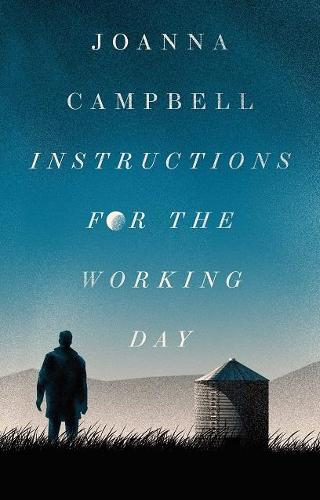
Neil has travelled to Marschwald to assess its state and whether it can be restored. He’s a property developer, making his living by selling houses he’s repaired and renovated. On his way he picks up a hitchhiker, a young woman who introduces him to her uncle and seems strangely reluctant to leave Neil, eventually heading off to Berlin where she plans to visit a museum, once a Stasi prison. Neil is lodging with Silke who welcomes him to the home she shares with her brother, Thomas. It’s the only welcome Neil will receive. Hostility and silence greet him at every turn not least from Thomas. The villagers have high expectations of this man who now owns their crumbling homes and are unimpressed with his ineffectualness. Thirty years after the Wall came down, Silke has decided to visit Berlin where she spent barely a term at university, asking Neil for a lift to the station. What she discovers there is devastating, a secret she confides in Neil who has his own revelations to deal with. By the end of the novel, both of them have understood the damage inflicted on them by the old regime; one will find liberation, the other will not.
She steps across the line of cobblestones into what was once called West Berlin. She crosses it back into what was once known as East Berlin. She is the same woman whichever side she stands. She has always been the same.
This is a quietly riveting novel, hard to write about without out giving too much away. Campbell switches between the present and the past, exploring the aftermath of the Wall’s fall from both Neil’s and Silke’s perspectives as she unfolds their backstories: Neil’s childhood as the son of a controlling father given to playing mind-games with his son from which he’s never recovered, his grip on reality tenuous; Silke’s attempts to escape a regime whose surveillance machine was vast, recruited from friends, family and neighbours, and her determination to learn the truth. Freedom was a longed for prize for many, but it came with a high psychological cost to those who had long been schooled to fear what was on the other side of a barrier supposedly erected to defend them. Campbell’s thoughtful novel leaves you with much to contemplate while delivering a suspenseful piece of storytelling which had me gripped to its end.
Fairlight Books: Oxford 9781914148156 256 pages Hardback (Read via NetGalley)
Discover more from A Life in Books
Subscribe to get the latest posts sent to your email.
I too am interested in East Germany, though I only visited once in the days of The Wall. Your review makes this sound a thoughtful and insightful book which I shall be looking out for – thanks.
Parts of it still feel left behind. I travelled from Amsterdam to Leipzig on the train before the pandemic. Lots of abandoned, crumbling buildings. I hope you enjoy this one as much as I did.
PS Comment posted without my logging out first!
Hurrah!
I’m so pleased you enjoyed it too!
Thank you for the added encouragement to read it!
I am quite partial to a novel set in East Berlin and this sounds structurally interesting as well.
It’s quite a quick read, Cathy. Pacy, but leaves you with lots to think about.
Sounds a compelling read, and as it itself points out with themes and questions that remain as relevant today, whether freedom or fear, and Big Brother if course.
Absolutely! Damage that can be carried down generations.
This sounds immensely powerful. The fallout from regimes across generations is such a complex subject and it sounds really well explored here. That first quote is chilling.
She handles that theme so well. Highly recommend this one.
Another one to add to my tbr list!
You won’t regret it, Helen.
Now I need to read this 🙂