



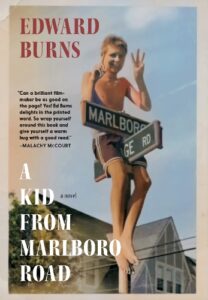
Actor film-maker Edward Burns’s A Kid on Marlboro Road also opens in the 1970s when a young Irish American boy and his family are living on Long Island. The novel begins with the death of his beloved grandfather, the first dead person he’s seen. Through the boy’s eyes, we see his mother struggling with depression, knowing that he will leave her just as his father and brother did before him. ‘Stories cascade between the prior generation’s colorful origins in the Bronx and the softer world of the of Gibson, the town on Long Island where the family lives now’ according to the blurb which sounds both appealing and a tad autobiographical.
 Clemens Meyer’s Bricks and Mortar is a bit of a doorstopper but it covers a period I find perennially fascinating, following the story of the sex trade in a former GDR city, from just before 1989 to the present, through the experiences of one man, augmented by many others involved in the trade. ‘In this ambitious novel, Clemens Meyer pays homage to modernist, East German and contemporary writers like Alfred Döblin, Wolfgang Hilbig and David Peace but uses his own style and almost hallucinatory techniques. Time shifts and stretches, people die and come to life again, and Meyer takes his characters seriously and challenges his readers in this dizzying eye-opening novel that also finds inspiration in the films of Russ Meyer, Takashi Miike, Gaspar Noé and David Lynch’ according to the burb. Ambitious, indeed.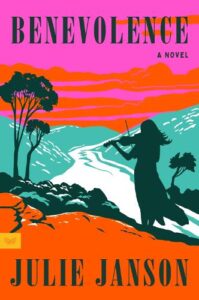
Set in the early nineteenth century, Australian writer Julie Janson’s Benevolence follows Muraging whose people, the Durang, are indigenous to a land brutally colonised by white settlers claiming it as part of the British Empire. When Muraging is ten she’s sent to the Paramatta Native School where missionaries rename her, forcing her to adopt ways that are not her people’s. Six years later, she runs away. ‘Award-winning Australian writer Julie Janson’s draws on historical events to recreate this pivotal time—things that may have happened to her own ancestors—giving voice to an Aboriginal experience of early-settlement in Australia’ says the blurb. A tough read, I’m sure, but an enlightening one.

I rarely mention reissues but Belinda McKeon’s Tender is a favourite of mine. Catherine and James meet in Dublin in 1997 and almost instantly click. He’s tactile and outgoing, yet tender-hearted, while she’s self-conscious, buttoned up and naïve. Before long everyone’s convinced they’re a couple. When James tells Catherine he’s gay, she basks in the glamour of this new sophisticated status, spilling the beans to those James hasn’t yet told. Then things take a different turn towards obsessive and impossible love. The novel ends in 2012 with Catherine and James established in their adult lives – one happy, one not. A beautiful novel: raw yet compassionate.
That’s it for November. A click on a title will take you either to my review or to a more detailed synopsis should you want to know more. If you’d like to catch up with new fiction, it’s here and here.
Discover more from A Life in Books
Subscribe to get the latest posts sent to your email.
Tender sounds like one I’d enjoy. Thanks as always for the list.
My pleasure, Claire. I loved Tender. Gorgeous writing! I’d also recommend Solace, her debut.
Bricks and Mortar is very tempting, even though its a doorstopper!
It’s such an interesting period setting, isn’t it.
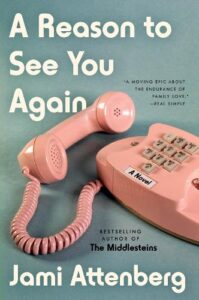
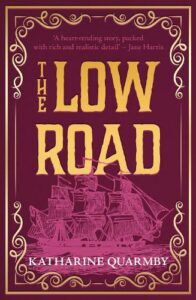
My library’s only come good on The Low Road this time, and I don’t think I feel quite motivated enough (owing to the impossible length of my TBR) to hunt any of the rest down elsewhere this time, though the Attenberg sounds appealing. An author I’d not come across, yet there are several other titles in the library catalogue.
She made a big splash with her debut a couple of decades ago but her subsequent books havn’t met with the same response here as far as I know. Saint Mazie was great, and I do like the sound of this one.
Thanks! I’ll see what I can do.
I would think the Edward Burns book is quite autobiographical. I have read recent interviews with him about it. The Australian books sound interesting. I am a fan of Australian historical fiction writers such as Kate Grenville. I still have to read both of Belinda McKeon’s books. Currently reading and laughing my way through Alison Espach’s The Wedding People. Highly recommend it.
I thought that would be the case with the Burns. I loved both Solace and Tender. She doesn’t seem to have published anything else for quite some time. Thanks for the Espach recommendation.
Must get onto the Attenberg (might be a good beach read for the summer) – I’ve always enjoyed her books.
The social change theme in particularly appealing.
The Attenberg is well worth reading; hardly any author does dysfunctional families better.
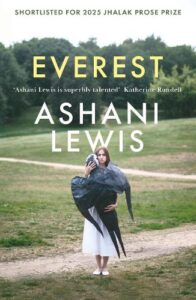
Ashani Lewis won two major awards at the Society of Authors prize-giving this year (I attended because of judging the McKitterick Prize) and I’ve been curious about whether to give her a try. I wasn’t impressed by the reading she gave at the ceremony.
That’s good to hear. I enjoyed Winter Animals as I was reading it but it’s not one that’s stayed with me. I’ll probably give her short stories a try, though.
Benevolence sounds promising. There is so little Australian fiction published in the UK that to find one makes a refreshing change
I’ve never understood why that is given that so many American books are published here. It’s probably something to do with rights.
Tender really strikes me. It sounds like a dark-ish Stephen McCauley novel (not sure if he made it across the pond)!
I remember reading and enjoying several of his quite some time ago. Thanks for reminding me of him.