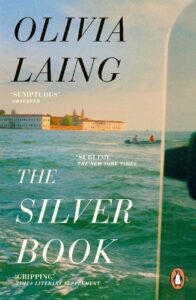
June’s paperback preview begins with one I was sure would appear on the Women’s Prize for Fiction list. Set during Italy’s Years of Lead, marked by violent clashes between the extreme Left and Right, Olivia Laing’s The Silver Bookfollows Nicholas who’s fled London for Venice. After a chance encounter with costume and set designer, Danilo Donati, he finds himself working first on Fellini’s Casanova, then Pasolini’s Salò. When Casanova resumes, Danilo and Nicholas return to Rome where the delight of finishing the film is interrupted by news of Pasolini’s murder. A beautifully executed novel of ideas as well as an homage to Italian cinema which sounds a loud warning about our own times.
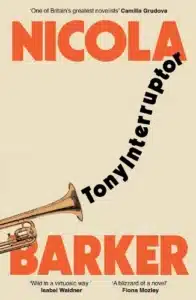
Nicola Barker’s TonyInterruptor explores the fallout from a question shouted from the audience at a jazz gig which goes viral. The interruption is inadvertently filmed by sixteen-year-old India who posts it on her Instagram, thrilled by the number of likes and followers it attracts. Alerted to this in the backroom postmortem after the gig, Sasha Keyes lets forth a diatribe, covertly filmed and posted by a band member. The usual hysteria, hateful comments and brief social media fame ensue sending fault lines through the lives of those involved. Barker smartly skewers artistic and intellectual pretensions while making her readers laugh and wince in recognition.
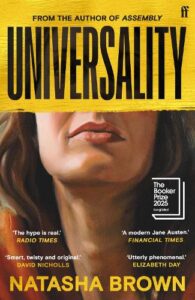
Natasha Brown’s debut, Assembly, was one of my books of 2021: a brief, powerful novella about a young woman of colour reassessing her place in the world. Her new one, Universality, sees a journalist solve a mystery surrounding the bludgeoning of a man on a Yorkshire farm with a solid gold bar, a solution which throws up more questions than it answers. ‘Universality is a twisty, slippery descent into the rhetoric of truth and power. Through a voyeuristic lens, it focuses on words: what we say, how we say it, and what we really mean’ says the blurb promisingly. Annabel also had high expectations for this one. You can read her review here.
Inspired by real events, Heather Clark’s The Scrapbook opens in Harvard in 1996 where Anna meets and falls in love with a German student just before graduation. Visiting Christoph at his home in Germany, she tries to understand him and his country still dealing with its part in the Second World War and the horror of the Holocaust. While longing to believe in the future he promises, Anna becomes increasingly unsettled by the implications of that history. Very much like the sound of that.
I’m not at all sure about Austin Taylor’s Notes on Infinity, included because of its comparisons with Gabrielle Zevin’s Tomorrow and Tomorrow and Tomorrow about which I was also highly sceptical but loved. It follows Zoe and Jack who meet at Harvard, forming a start-up which proves highly successful within two years of graduation. Their partnership, both professional and personal, seems unstoppable until an accusation is made which threatens to ruin all they’ve achieved. ‘A captivating, deeply poignant novel about ambition, deceit, the recklessness that comes with early success and the way that love can make us feel invincible’ according to the blurb. We’ll see.
I’m in two minds about Virginia Evans’s Women’s Prize for Fiction longlisted The Correspondent too, but I do like an epistolary novel. It follows seventy-three-year-old Sybil who’s sat down every morning for thirty years to write letters to all manner of people, from her brother to her favourite authors. It’s a tactic she’s used to keep herself at a distance, and it’s worked until she begins to receive letters which prompt her to examine a past she’s been trying to escape. ‘Sybil Van Antwerp’s life of letters might be ‘a very small thing’, but she also might be one of the most memorable characters you will ever read’ says the blurb confidently.
Rowe Irvin’s Life Cycle of a Moth didn’t initially appeal, either, and I can’t now remember whose blog made me change my mind. It follows Maya and Daughter who live in an isolated forest, their routines and rituals matching the season. When Daughter is almost sixteen, a stranger appears unsettling their cloistered existence. ‘Where there was always two, suddenly there are three – and the carefully constructed world that Maya has built to keep her daughter safe may not survive it’ according to the blurb. Still unsure but whoever’s review I read persuaded me to give it a try.
That’s it for the first batch of June’s paperbacks. A click on a title will take you either to my review or to a more detailed synopsis should you want to know more. If you’d like to catch up with new fiction, it’s here and here.
I really must get to The Silver Book soon – it’s in the TBR! Also I want to return to Nicola Barker, I used to read everything by her and then I lost track. Tony Interrupter sounds great.
I was so disappointed not to see the Laing on the Women’s Prize longlist at least. Tonyinterruptor is both fun and relevant. Hope you enjoy them both when you get to them.
TonyInterruptor was FAB! Thanks for the link to Universality too. I’ve not heard a bad thing said about The Correspondant, and The Silver Book goes onto my list – a Venice setting is a must for me!
Lots of good ones on the list this month! I read Brown’s Universality last fall, when it was in the running for the Booker. I thought it was very, very good (although I wasn’t bothered by its failure to make the short list) Like many, I’ve had Laing’s Silver Book on the TBR for some time — I’ve been saving it as a treat! Scrapbook sounds interesting but — it faces a great deal of competition from my existing & enormous list of unread books! As for The Correspondent, well — it’s very buzzy right now but something about it puts me off. Could it be the premise that someone would write a letter EVERY morning for thirty years? (I’m afraid I betray myself here — I might write ONE letter in thirty years, not vice versa!). On the other hand, like you, I do like an epistolary novel now and again …..
I honestly can’t remember the last time I wrote a letter! It’s mainly birthday and Christmas cards these days. The Silver Book is so good. I was surprised not to see it on either the Booker or Women’s Prize lists. I hope you enjoy it when you get to it.
The only letter I write regularly is a monthly one in French to a close friend who is French. We’re both passionate readers & this is our Literary Letter where we catch up on all we’ve been reading that month. Although we also meet and chat, mostly about books tbh, every month, we’ve kept this letter exchange going for several years and love it.
Do give The Correspondent a go — I fully expected it to be twee, but I’m halfway through a library copy now (it’s a future book club read) and it’s been a joy. The protagonist is very Strout: mostly Olive Kitteridge in her letters to others, but more Lucy Barton in her private moments. And all the more delightful for me because it’s set in Maryland and I recognize the locations as well as most of the books mentioned.
Definitely more attractive than the hardback edition although it might suggest a lighter novel to some prospective readers. You’ve sold me The Correspondent!
I can certainly vouch for The Silver Book – one of my Top Reads for 2025 too. In this batch, I think I’ll head for the Heather Clark first. Always interested in Germany’s troubled relationship with its past.
I see Evans has made it to the Womens Prize shortlist. I haven’t read it yet. I have read The Scrapbook and reviewed it on my Substack post. Its a good fiction book, based on the authors family history. But I had issues with the credibility of the story in places. I think Rachel Seiffert’s works are more superior on the topic.
Indeed it has which makes it all the more surprising that the Laing wasn’t even longlisted. Perhaps I’ll change my mind after I’ve read it! Thanks for the warning about the the Clark.
Tony’s Interrupter and The Scrapbook are going straight to my TBR! I read/reviewed The Correspondent in March. Aside from one thing I knew was idiotic from working with lawyers [and which the general public would not know] I mostly liked it.
I didn’t love Universality, so it was interesting for me to read from you and those here who did like it. I’ve not picked up The Correspondent although like you I love reading epistolary novels, as well as nonfiction books of letters. Something keeps making me hesitate. And then the Heather Clark. I just returned it to the library unread, due to feeling overwhelmed with the TBR stack. But I’ve been circling it since it released. Clearly, I need to just read it!
I’m not sure the UK cover is helping The Correspondent; it suggests the possibility of fluffiness for me. Lots of positive comments on here are spurring me on, though. Odd how we’re attracted to some books but can’t quite get stuck in!





I really must get to The Silver Book soon – it’s in the TBR! Also I want to return to Nicola Barker, I used to read everything by her and then I lost track. Tony Interrupter sounds great.
I was so disappointed not to see the Laing on the Women’s Prize longlist at least. Tonyinterruptor is both fun and relevant. Hope you enjoy them both when you get to them.
Some good ones there. Thank you. I’m particularly attracted by the first for the theme and because I’ve spent a lot of time in Venice and Rome.
My pleasure. It’s a dark novel but very evocative of Italy during that period. One of my books of 2025.
TonyInterruptor was FAB! Thanks for the link to Universality too. I’ve not heard a bad thing said about The Correspondant, and The Silver Book goes onto my list – a Venice setting is a must for me!
You’re welcome, and that’s very reassuring about The Correspondent. The Silver Book is brilliant, if dark.
I didn’t get on with Universality at all, but very much looking forward to The Silver Book this summer.
I hope you get on better with the Laing, Cathy.
Lots of good ones on the list this month! I read Brown’s Universality last fall, when it was in the running for the Booker. I thought it was very, very good (although I wasn’t bothered by its failure to make the short list) Like many, I’ve had Laing’s Silver Book on the TBR for some time — I’ve been saving it as a treat! Scrapbook sounds interesting but — it faces a great deal of competition from my existing & enormous list of unread books! As for The Correspondent, well — it’s very buzzy right now but something about it puts me off. Could it be the premise that someone would write a letter EVERY morning for thirty years? (I’m afraid I betray myself here — I might write ONE letter in thirty years, not vice versa!). On the other hand, like you, I do like an epistolary novel now and again …..
I honestly can’t remember the last time I wrote a letter! It’s mainly birthday and Christmas cards these days. The Silver Book is so good. I was surprised not to see it on either the Booker or Women’s Prize lists. I hope you enjoy it when you get to it.
The only letter I write regularly is a monthly one in French to a close friend who is French. We’re both passionate readers & this is our Literary Letter where we catch up on all we’ve been reading that month. Although we also meet and chat, mostly about books tbh, every month, we’ve kept this letter exchange going for several years and love it.
That’s such a lovely idea, Helen. I’m sure it helps you think about (and remember) what you’ve both read. That’s partly why I blog.
I like that new cover on The Silver Book.
Do give The Correspondent a go — I fully expected it to be twee, but I’m halfway through a library copy now (it’s a future book club read) and it’s been a joy. The protagonist is very Strout: mostly Olive Kitteridge in her letters to others, but more Lucy Barton in her private moments. And all the more delightful for me because it’s set in Maryland and I recognize the locations as well as most of the books mentioned.
Definitely more attractive than the hardback edition although it might suggest a lighter novel to some prospective readers. You’ve sold me The Correspondent!
It would be my prediction to win the Women’s Prize.
I’m still on the fence about picking up the correspondent!
Maybe Rebecca’s comment will persuade you. She’s certainly convinced me!
It has!
Hope we both enjoy it!
I wouldn’t make Notes on Infinity a priority – it’s no Tomorrow x3!
Thanks for the warning! That cover is pretty off-putting, too.
I like the sound of Scrapbook and am curious too about Correspondent
The Correspondent seems to be this week’s favourite.
I can certainly vouch for The Silver Book – one of my Top Reads for 2025 too. In this batch, I think I’ll head for the Heather Clark first. Always interested in Germany’s troubled relationship with its past.
I thought the Laing was extraordinarily good, and me, too, with the Clark which sounds as if it comes at it from an unusual angle.
Agreed X 2!
I see Evans has made it to the Womens Prize shortlist. I haven’t read it yet. I have read The Scrapbook and reviewed it on my Substack post. Its a good fiction book, based on the authors family history. But I had issues with the credibility of the story in places. I think Rachel Seiffert’s works are more superior on the topic.
Indeed it has which makes it all the more surprising that the Laing wasn’t even longlisted. Perhaps I’ll change my mind after I’ve read it! Thanks for the warning about the the Clark.
Universality is on my summer reading list. I hope I enjoy it as much as you!
Fingers crossed, Marcie
Tony’s Interrupter and The Scrapbook are going straight to my TBR! I read/reviewed The Correspondent in March. Aside from one thing I knew was idiotic from working with lawyers [and which the general public would not know] I mostly liked it.
Good to hear! It’s been pretty much a thumbs up for The Correspondent on here.
My picky thing was just with lawyers–nothing that need affect reading the story.
I didn’t love Universality, so it was interesting for me to read from you and those here who did like it. I’ve not picked up The Correspondent although like you I love reading epistolary novels, as well as nonfiction books of letters. Something keeps making me hesitate. And then the Heather Clark. I just returned it to the library unread, due to feeling overwhelmed with the TBR stack. But I’ve been circling it since it released. Clearly, I need to just read it!
I’m not sure the UK cover is helping The Correspondent; it suggests the possibility of fluffiness for me. Lots of positive comments on here are spurring me on, though. Odd how we’re attracted to some books but can’t quite get stuck in!