



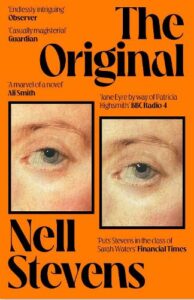
In Nell Stevens’s The Original, nine-year-old Grace is sent to Inderwick Hall when her parents are confined to an asylum. An unwelcome guest, her only ally is her cousin, Charles, who abruptly leaves after a row with his father. When a letter arrives from a man claiming to be Charles Inderwick, years later, the household hangers-on decry him as an impostor, but Grace’s aunt becomes convinced. Should he prove his case, he will inherit the estate but after the death of her father, it’s Grace who will become the heir. The Original‘s premise is a familiar one, both in fiction and history, but Stevens steers well clear of cliché, keeping us guessing.
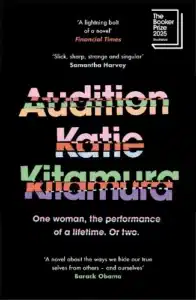
Katie Kitamura’s Booker Prize shortlisted Audition sees two people meet for lunch at a Manhattan restaurant, one an accomplished actress, the other young enough to be her son. The question is what are these two to each other? ‘In this compulsively readable, brilliantly constructed novel, two competing narratives unspool, rewriting our understanding of the roles we play every day – partner, parent, creator, muse – and the truths every performance masks, especially from those who think they know us most intimately’ according to the enthusiastic blurb. Kate wasn’t entirely convinced. You can read her review here. I read A Separation some time ago and found it quite unsettling but it’s stayed with me, which is more than I can say for many novels.
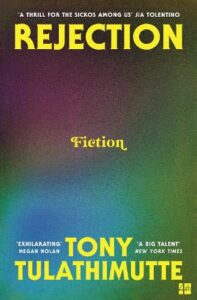
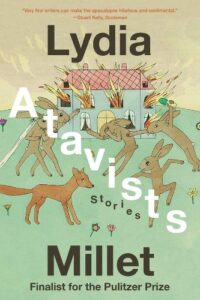
Four years ago, I reviewed Lydia Millet’s Dinosaurs having read nothing by her for nearly two decades, ending with a determination to seek out more of her work which, unsurprisingly, I failed to do. Atavists, her linked short story collection, follows a group of families, couples and loners through post-pandemic America in a variety of settings, from beauty salons to medieval role-playing festivals, college campuses to assisted living facilities which sounds very enticing to me.
That’s it for April. A click on a title will take you either to my review or to a more detailed synopsis should you want to know more, and if you’d like to catch up with part one it’s here. New fiction is here and here.
Discover more from A Life in Books
Subscribe to get the latest posts sent to your email.
The Original has been on my wishlist for a while. It has lots of other books for company, partly due to posts like this!
Ah, sorry, but I’m sure you’ll enjoy it when you get to it!
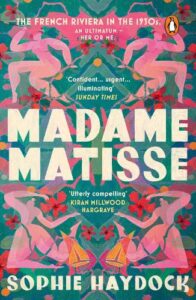
I thoroughly enjoyed Madame Matisse, which conjured up the world she lived in, I thought. And the Kitamura has been on my radar since I read The Separation, which stayed with me too. I’ve tried a few books which focus on social media, and they tend to alienate me, as it feels like a foreign country I don’t want to visit, so I’ll give Rejection a miss. But the rest sound worth a punt. In fact the Hunter is now reserved at the library.
I’m sure I’ll give the Haydock a try – the art theme is hard to resist for me. I enjoyed the Hunter very much, one of my many Women’s Prize wishes that wasn’t fulfilled.
Of these I’ve read Audition, which I didn’t like, and Rejection, which I did. The Original and Days of Light also appeal.
I might swerve Audition, then, but pleased to hear you enjoyed Rejection, Cathy.
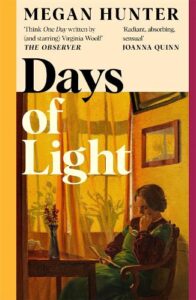
Days of Light was very good, a big step up for Megan Hunter, I thought. I’ve never read Nell Stevens or Tony Tulathimutte but both are on my radar. Sophie Haydock’s first novel was a DNF for me – unearned intensity of emotion, flattening use of present tense, it all just felt a bit clunky – so I wouldn’t say Madame Matisse is likely to be a must-read on that basis. A Separation is the only one of Kitamura’s books that I’ve read, too, and like you I found it impactful if not exactly loveable; thus far I’ve decided to give Audition a miss, though.
I’m moving further towards avoiding Audition after Cathy’s comment, and now yours. Thanks for the Haydock warning.
Your mileage may vary – it just didn’t work for me.
The Original looks excellent – how did I miss it when it was first released??
And yes, you know my thoughts on Audition (thank you for the link). I will absolutely read more from her in the future because I loved her previous work but Audition felt like I was being tricked. My book group read it, and the majority felt similar – we all loved the beginning, but the pivotal moment divided us (some thought it was clever from a structural point-of-view but most, like me, felt duped).
The premise of Audition sounded so promising. I’m pretty sure I’ll be giving it a miss, though. The Original is great. An interesting take on the value of a copy!
I really enjoyed Madame Matisse – just sayin’. I have the Megan Hunter on my shelves, and the Lydia Millett really appeals although I’m not a big short story reader.
Unlike Audition, I’m pretty sure I’ll give The Haydock a try!
I see Audition is on the Womens Prize longlist too. I haven’t read it yet. Have you Susan? Just wondering if its worth my time or whether to wait til the shortlist is announced.
I was a bit lukewarm about Audition and today’s comments have swung me further against it so I’ll probably give it a miss.
I like that paperback cover for Days of Light. My library ordered in The Original per my request, so I’ll be reading that one soon.
Much better than the hardback edition, isn’t it. Hope you enjoy The Original.
Hi Susan
‘Madame Matisse’ follows a fashion to look at the partners of famous people. In a way, that’s a cliche and mostly boring.
We found the review of ‘Audition’ interesting. We’ll have a closer look at this book.
Thanks and cheers
The Fab Four of Cley
🙂 🙂 🙂 🙂
Thanks! I’m less keen on reading Audition than I was after reading Kate’s comment.
Definitely want to read the Megan Hunter, I’ve really enjoyed her previously.
I do like her writing.